Pioneer in ISO modular solutions

Click to see our video's at YouTube

We are re-engineering our business model and here you can read why. Sit back and relax because the story can not be told in 2 minutes. To make a long story short: we used to be the company where you can have your idea turned into a design, have the units manufactured and delivered and have engineers sent over to assist in making a great building from a stack of prefabricated modules. Don't worry, we can still do that, but our role is changing towards being consultant in helping you building your business or your project, rather than just a supplier. Consultancy for your real estate project but also for setting up local production. Here is why.

Tempohousing is a true pioneer in the use of ISO shipping container frames as a basis for modular homes. It all started in 2002 while celebrating the birthday of one of the founders. Unlike most great stories in bars and at parties, this idea really had to be followed up and that happened. Many students waiting for a home in the densely developed urban area of Amsterdam, hardly any location available for cheap student homes, let alone homes that are mobile, relocatable and yet meet all modern standards for comfort and safety.

There you go: the shipping container home was born. Use an old container and save big on the carbon footprint. A turn key home for half the price of a traditional one. To good to be true? No: we did take the old idea of being creative with an old and ugly rusting and dented container to an industrial level and even built a factory in China in 2004, producing container homes up to 40 per week, like a car production line! No one had that done before. The idea has been copied many times and you will find several suppliers, some even using pictures of Tempohousing as if it was their own product and idea! Well, that is maybe not honest of them, but on the other side it is flattering too: apparently the Tempohousing images add some credibility.

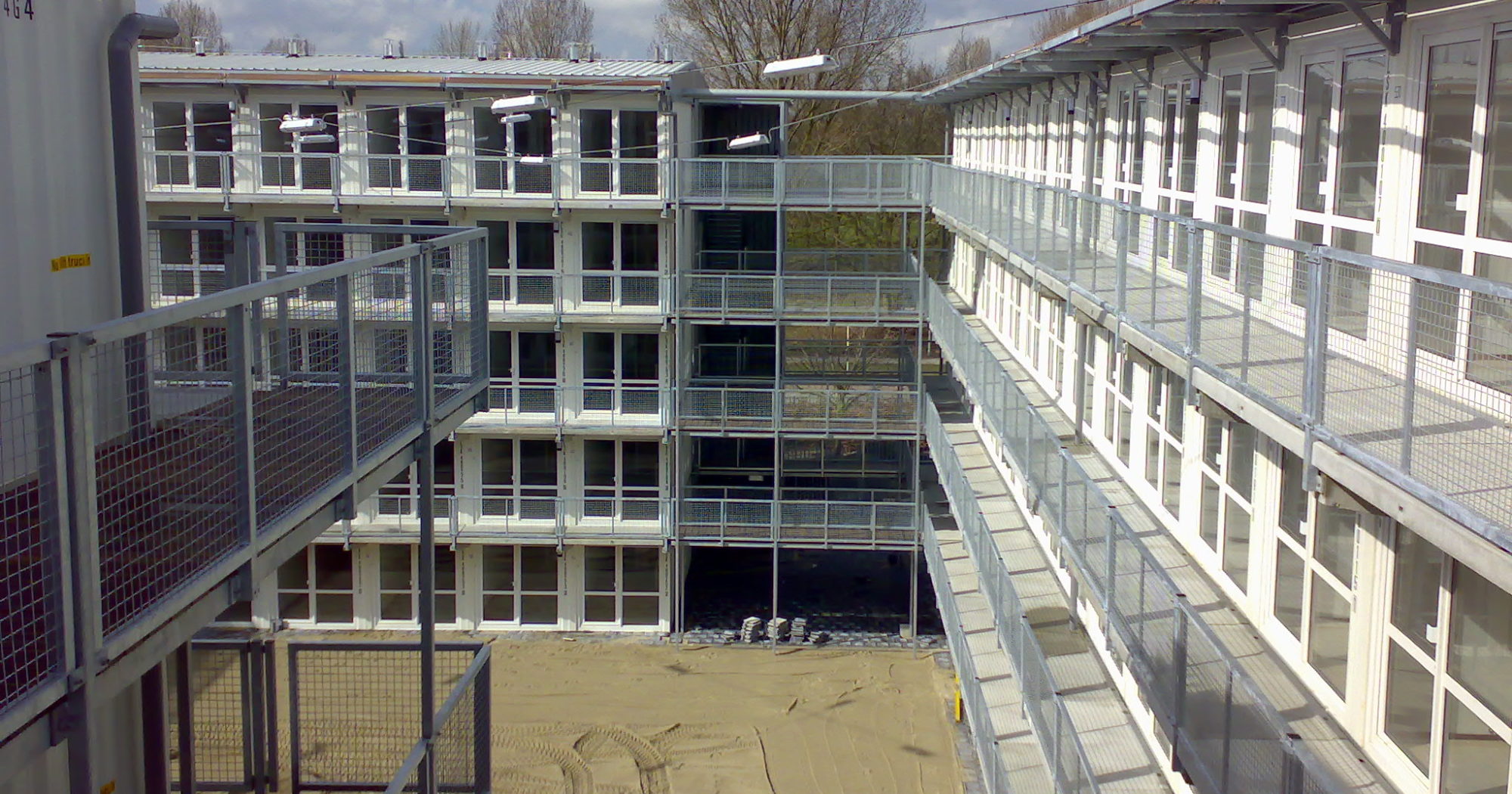
Since the start in 2004, building real container homes that meet the highest standards in European building regulations, we have designed and built many different projects, mostly successful projects, some with quite some difficulties. In total more than 2000 Tempohousing containerhomes or hotel rooms found its way to a customer. It is important to understand that they all look like shipping containers, but in fact it is a modified design, since our 'boxes' are meant to live in, not to transport cargo. The key difference is the structural integrity of the steel frames. A cargo container may for example deflect up to 60 mm under transversal (sideways) forces and there are ISO standards to read that back: ISO 1496. When a container complies with this international standard, the container is fit for a 'container safety convention' plate and then the container is accepted on a standard container vessel. But our standards for accommodation certainly go beyond that: the maximum deflection should be less than 10 mm. If not: your windows would easily break in stormy conditions! This is just one example why we completely redesigned the frame of the container to make is suitable to live in. Most people perceive a standard shipping container as a very solid construction. Just cut a bunch of holes for windows and doors: how expensive can that be?? Well, try that and you will find out that it takes a lot more to build a safe home.

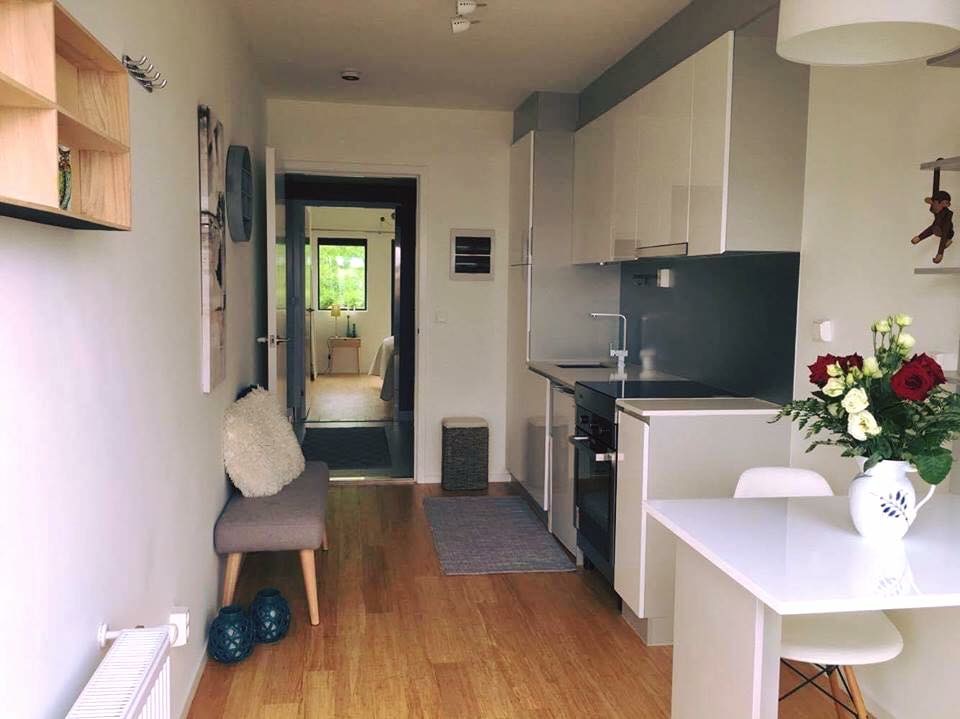
We have made different types of accommodation: single homes for the student (the model is called 'Professor'), double homes that serve as an apartment, double units with 3 bedrooms that serve as low cost staff accommodation, we have built a cafe and a super market and we have built 2 hotels with luxury rooms. We even built our own office building and a laundry and a shop: well, the number of applications is endless of course. Sometimes we just built some experiments, like a mini hospital with all medical equipment that needs no external power to operate, ideal for remote areas. For a rock festival we built a 40 ft container, that contains four (!) hotel rooms, complete with double bed, bathroom, heating system and minibar: I slept in that mini hotel room myself and I can testify that it was great. In 2007 we were invited by Sheikh Hamad in Abu Dhabi where this visionary entrepeneur was developing a real mountain in the desert as high as the Eiffel Tower in Paris and he wanted us to construct small mountain cabins (from containers) on poles so his guests could enjoy the real desert experience. We never built these cabins, but the meetings with the Sheikh, the tour in his garage full of Rolls Royces and all models of Hummers and the visits to the desert are unforgettable. This containerhome concept has brought us everywhere. Very few of these hundreds of trips and visits and plans came to realisation, what some may consider as a dissapointment, but we tend to see this as bringing such an enormous variety of ideas and visions from different cultures and different areas into our company and our team, that our claim of the 'true poineers of containerhomes' is in fact quite true.

The essence of the shipping container as a construction component is of course its standard size and its universal logistic system. This invention of the a one size steel container to serve all ports has changed the global economy dramatically and is has created the infrastructure for the Far East, China especially, to become the factory of the world. It is extraordinary that since the end of the sixties, literally every port in the world and every facility linked to these ports can handle standard 20 and 40 ft containers with their equipment. Standard 20 and 40 boxes travel all over the world with goods, some on giant container vessels sometimes carrying more than 5000 containers, some stored in ports, some waiting in logistic centers, you see them everywhere. And all of these million container will someday be written off economically and then they are offered for use in an alternative market, like containerhousing. Container homes can be built from new containers (purpose built frames) or old containers, where the steel structured is reinforced in some parts. Tempohousing has experimented with the different possibilities, building homes on site or off site, using new ones or old ones. It is all possible, all options have advantages and disadvantages. But with the need for sustainable use of scarce resources, it makes sense to build with existing materials and save emission, making the world a cleaner place.

When we say shipping container, what is the first image that come to your mind? Right: ugly boxes, stacked high in a port depot, rusty, dented and no windows. Can you actually live in such a steel box? No, not if you do not make significant changes and add some good insulation. And even after these changes, this is not the architectural dream you have in mind. These barriers are more psychological and therefore we prefer to apply a separate facade system, to add insulation and to give the building made of container, an elegant outside. Facades are available in abundant choices, from traditional brick (no fake) to high tech steel or shiny Italian marble: behind these facades are the original shipping containers and unless someone explains this, no one will ever know about the containers. We see a great future in setting up production lines worldwide where used containers are turned into prefabricated homes in different markets. Prefabrication can already contribute significantly to reduce construction cost while at the same time enhancing the quality of the product. A controlled fabrication area offers more quality than what happens out there on the construction site, in different weather conditions and without proper supervision. And the basic component for homes – used shipping containers - are available everywhere. Such 'local production' creates jobs, reuses scarce raw material, saves CO2 emission and reduces the construction cost. As you can see: many advantages. Add to this the use of separate cladding or facade systems and the prefabricated container homes can compete with any competition, in terms of elegance, price structure, speed of building and sustainability.

Of course the shipping container as a construction component is not for each and every project the right solution. The standard size to begin with, is of course great for reducing transport cost but it is also a limitation for building designs where the container simply does not fit in. The internal ceiling can not go higher than 260 cm (8,4 ft) and the interal width of a single container home is no more than 225 cm (7,3 ft). And if you make large openings in the container to create bigger spaces, the reinforcement can become too expensive. At some point, the container is just not the right choice for a design. We call this the tipping point: if you alter too much on the container, traditional construction might be cheaper. For high rise buildings, we do not think that when going higher than 7 floors, the container is the right choice.

On our website you will find many example of products, applications and projects already built. Over the years, we found out that the single (student housing or staff accomodation) and the double unit (apartment or 2 hotel rooms) are the best models when using shipping containers. Although one would expect that there are standard solutions and standard designs, this is not the case. Each project is unique and we have never built 2 project the same, just because the requirements, the designs, the regulations or the customer wishes are always different. It makes therefore no sense to ask for a catalogue with the standard prices of the standard models: we do not have such a catalogue. Call us today and we look forward to help you in your project with shipping containers.

Share this

Our latest newsletter

01-02-2013
February 2013 - MAY WE HAVE YOUR VOTE PLEASE? Choose your favorite design

My status Offline? contact page

Tempohousing wins Living Labs Award 2012

Living Labs Global Award

The new partner program

We are looking for new partners in various countries. Start your own Tempohousing company for exciting opportunities in building homes and hotels.

Tempohousing supports this initiative against cancer, never ever quit

Inspire 2 live